Srebrenik Fortress
Srebrenik · Majevica
History & heritage
Srebrenik appears in a charter from 1333; Tešanj has two well-known references from 1461. Neither date establishes when all the buildings now standing were constructed.
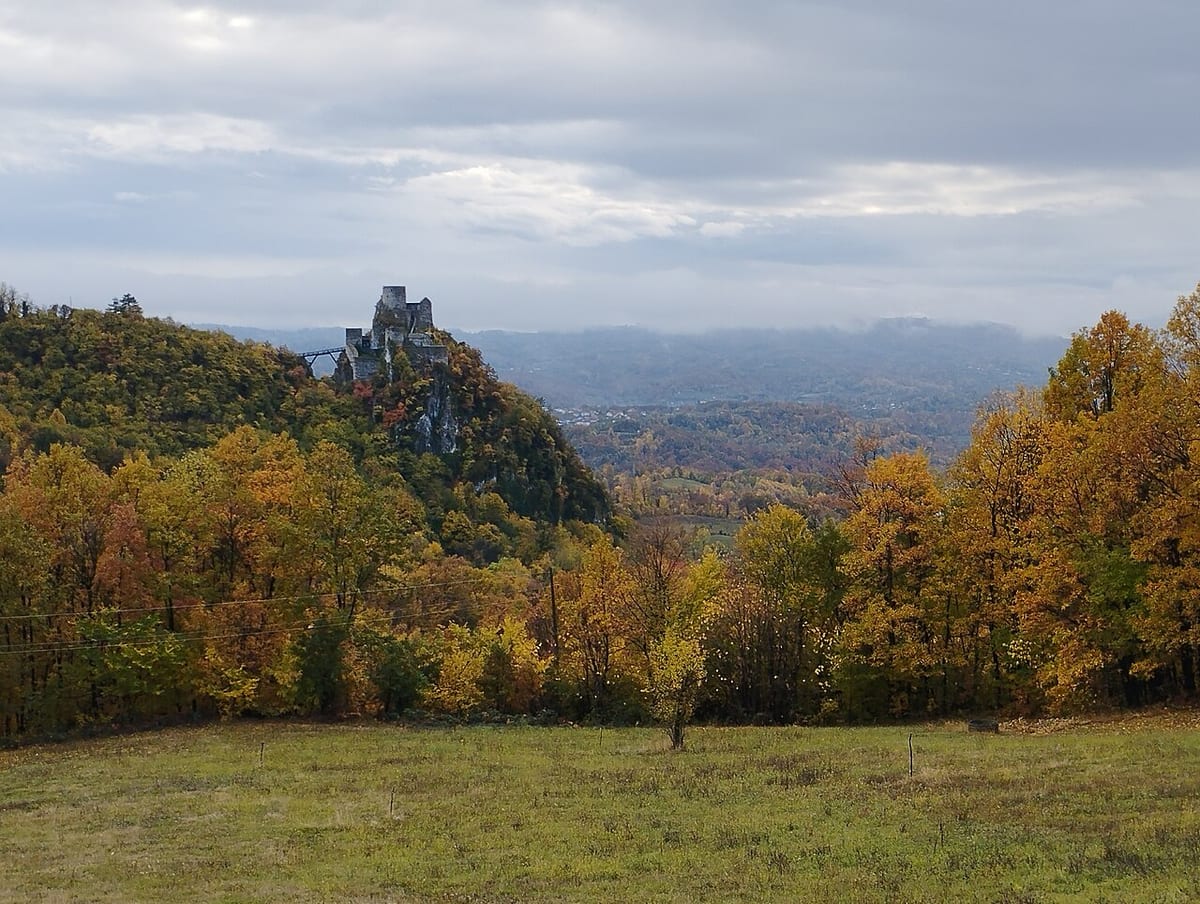
Srebrenik appears in a charter dated 15 February 1333, issued by Ban Stjepan II Kotromanić. The Museum of the Bosnian Kingdom places its issue in the settlement below the fortress. The record connects Srebrenik with the ban’s government and negotiations, but does not date the construction of its walls.
The familiar description “first mentioned in 1333” refers to the written record. A gate, tower and residence could have different construction histories even when they belong to the same fortress.
Tešanj’s two well-known references from 1461 concern a church and possession of the town. The Museum of the Bosnian Kingdom explains that the royal grant survives in a seventeenth-century version containing later insertions. It nevertheless treats the confirmation of Radivoj’s possession as reliable.
The distinction matters: a later copy can preserve an earlier transaction without every part of its wording belonging to the original document. The grant is evidence for possession of Tešanj, rather than a date for every surviving wall.
The Tuzla Canton Tourist Board describes an enclosure roughly 60 by 30 metres, spread across several levels, with a cistern and a detached approach tower. The limited space and changes in elevation shaped the arrangement of the buildings. The cistern provided water storage within the complex.
These surviving features help explain the fortress’s use. Establishing when each was built requires additional evidence; their proximity does not establish that they were constructed together.
A municipal report from 2016 describes new illumination at Srebrenik alongside restoration and tourism improvements. Lighting and visitor facilities form part of the modern history of the site.
A photograph records this accumulated condition: historic masonry alongside later repairs and presentation. The date of a written reference, the age of a particular structure and the date of a restoration are separate pieces of information.
Srebrenik · Majevica
Tešanj · Usora
Bosnian Castles editorial · Prepared with AI assistance using the cited sources. This is not a firsthand field report.