Srebrenik appears in a charter from 1333; Tešanj has two well-known references from 1461. Neither date establishes when all the buildings now standing were constructed.
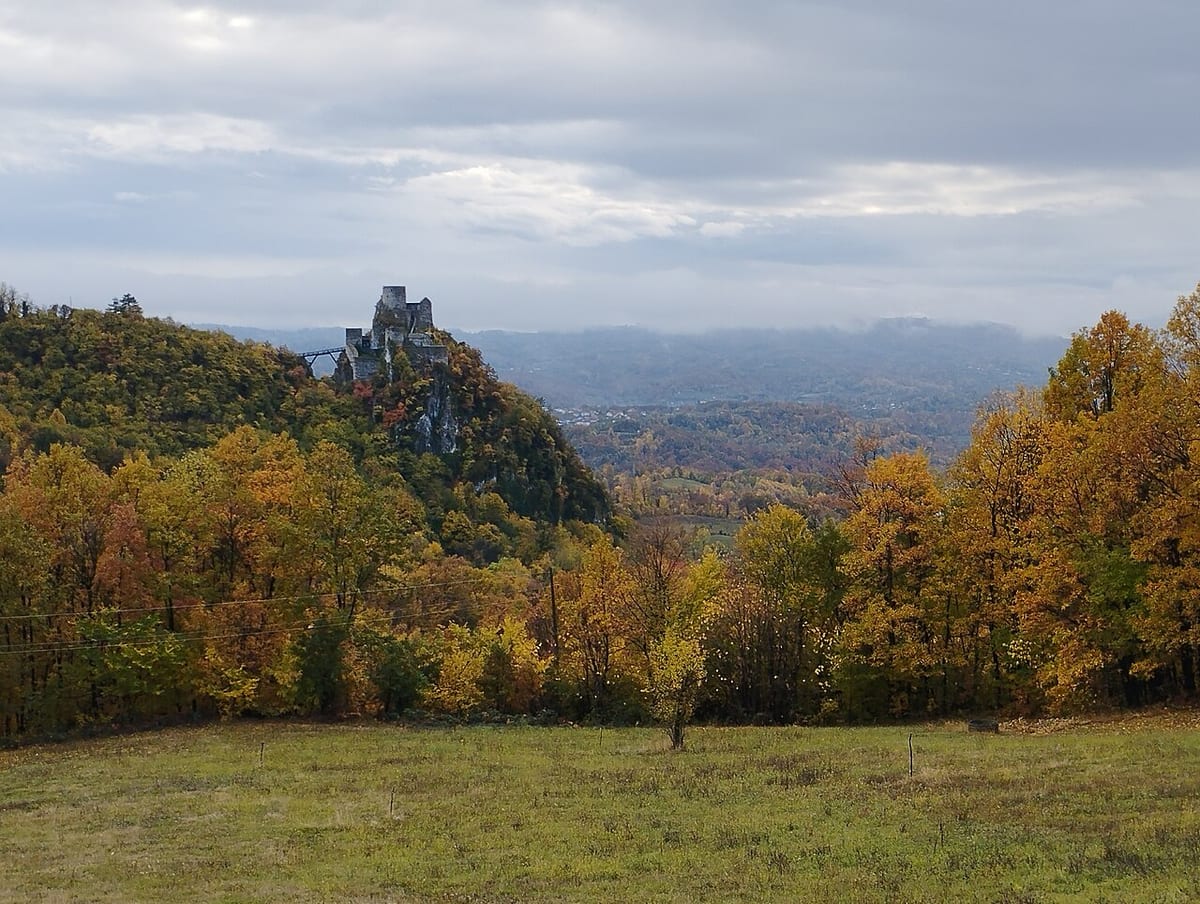
Srebrenik Fortress and its wooded rock outcrop, photographed in October 2025. MirkoS18 · CC BY 4.0 · Resized and compressed; no scene elements altered.
Three fortresses in the Bosna valley stood beside routes used by traders, townspeople and armies. Their histories extend into the settlements and approaches below the walls.
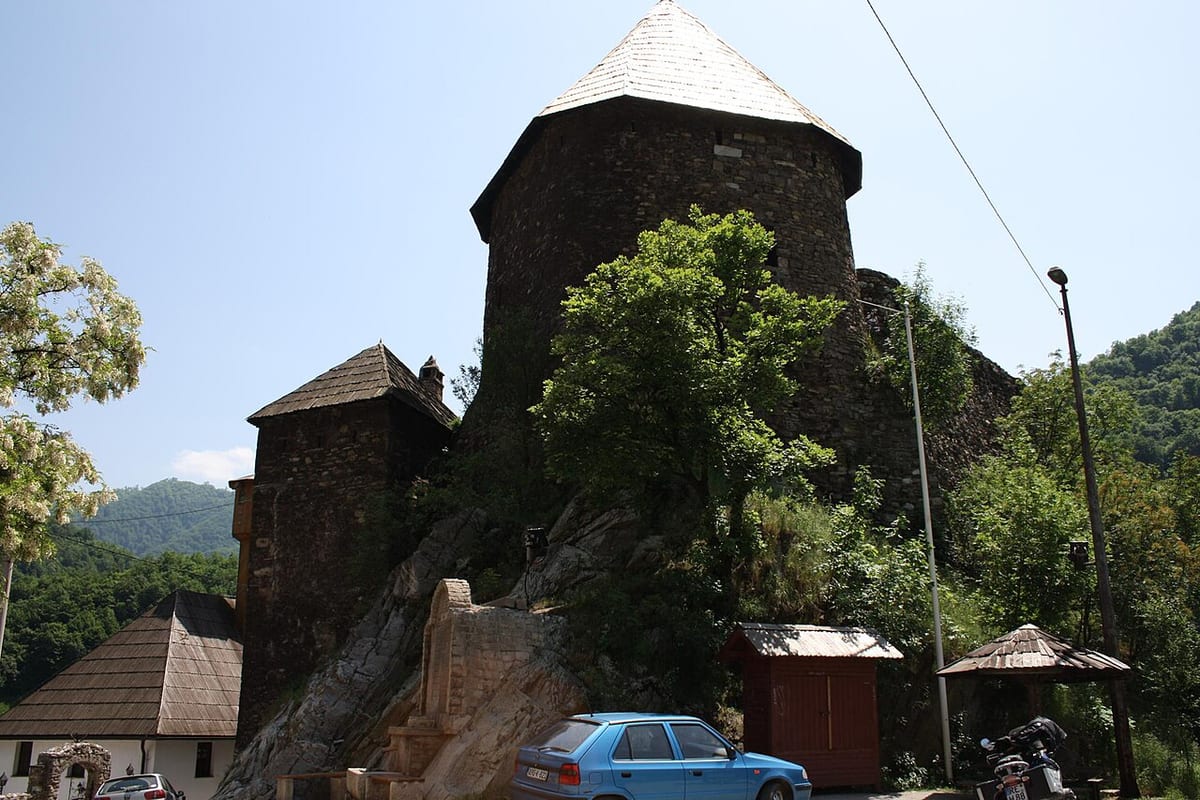
Vranduk Fortress above the village approach, photographed in May 2015. Assetta · CC BY-SA 3.0 · Resized and compressed; no scene elements altered.
A royal portal, artillery positions and later service buildings survive within these fortresses. The structures belong to different periods of occupation and repair.
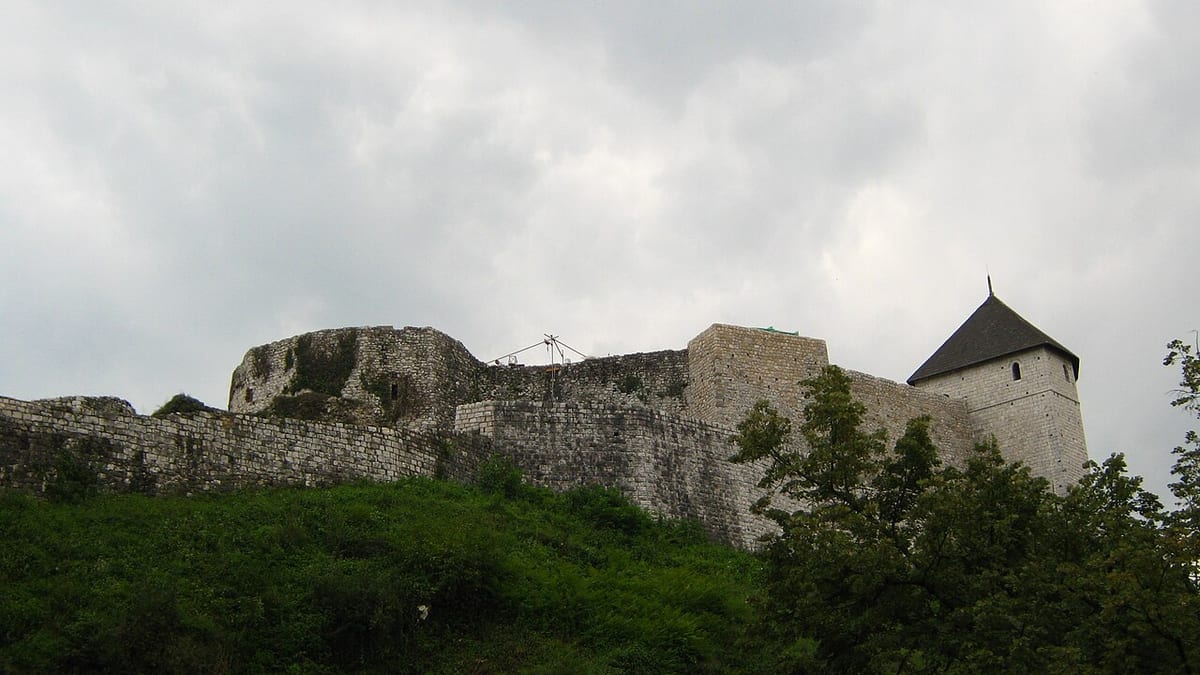
The walls and roofed tower of Tešanj Fortress. Photograph uploaded to Wikimedia in 2011; the capture date is not established. 2e1a0 · Public domain · Resized and compressed; no scene elements altered.
Bobovac housed royal government, a decorated palace and the graves of rulers. Its surviving stonework records connections with Central European workshops that are harder to see in the ruined walls alone.
Hrvoje’s commissions survive in a rock-cut church in Jajce and richly illustrated manuscripts now held abroad. They belong to the career of a Bosnian magnate whose authority also extended to the Dalmatian coast.
Ostrožac's courtyard contains work made centuries apart. Medieval records, Ottoman building campaigns, the Berks residence and the sculpture colony explain how such different uses came to share one enclosure.
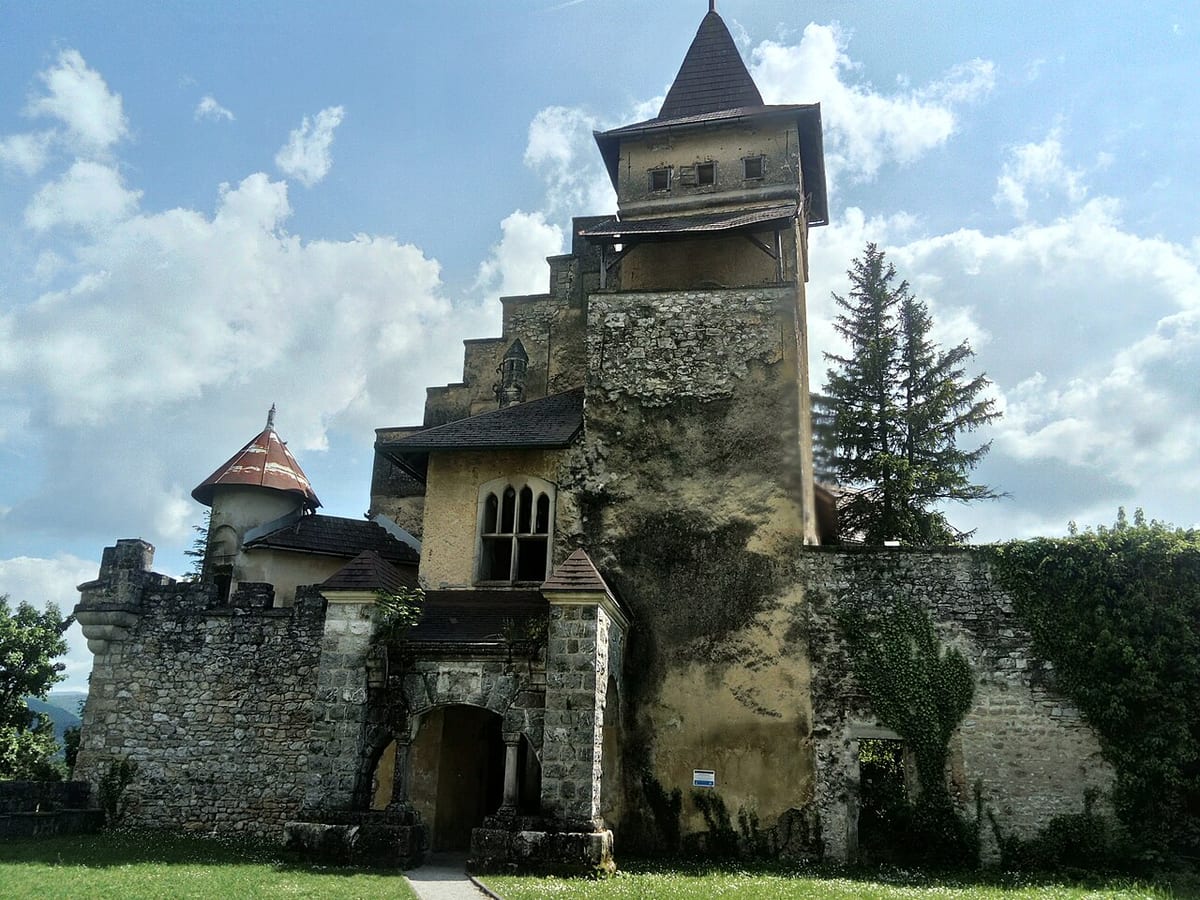
The later residential castle within the Ostrožac complex, photographed in May 2017. Golden Bosnian Lily · CC BY-SA 4.0 · Resized and compressed; no scene elements altered.
The houses below Počitelj's towers matter as much as the skyline. Their construction, wartime destruction and subsequent repair explain why conserving this place involves an entire settlement.