Ostrožac Castle
Cazin · Una Valley
History & heritage
Ostrožac's courtyard contains work made centuries apart. Medieval records, Ottoman building campaigns, the Berks residence and the sculpture colony explain how such different uses came to share one enclosure.
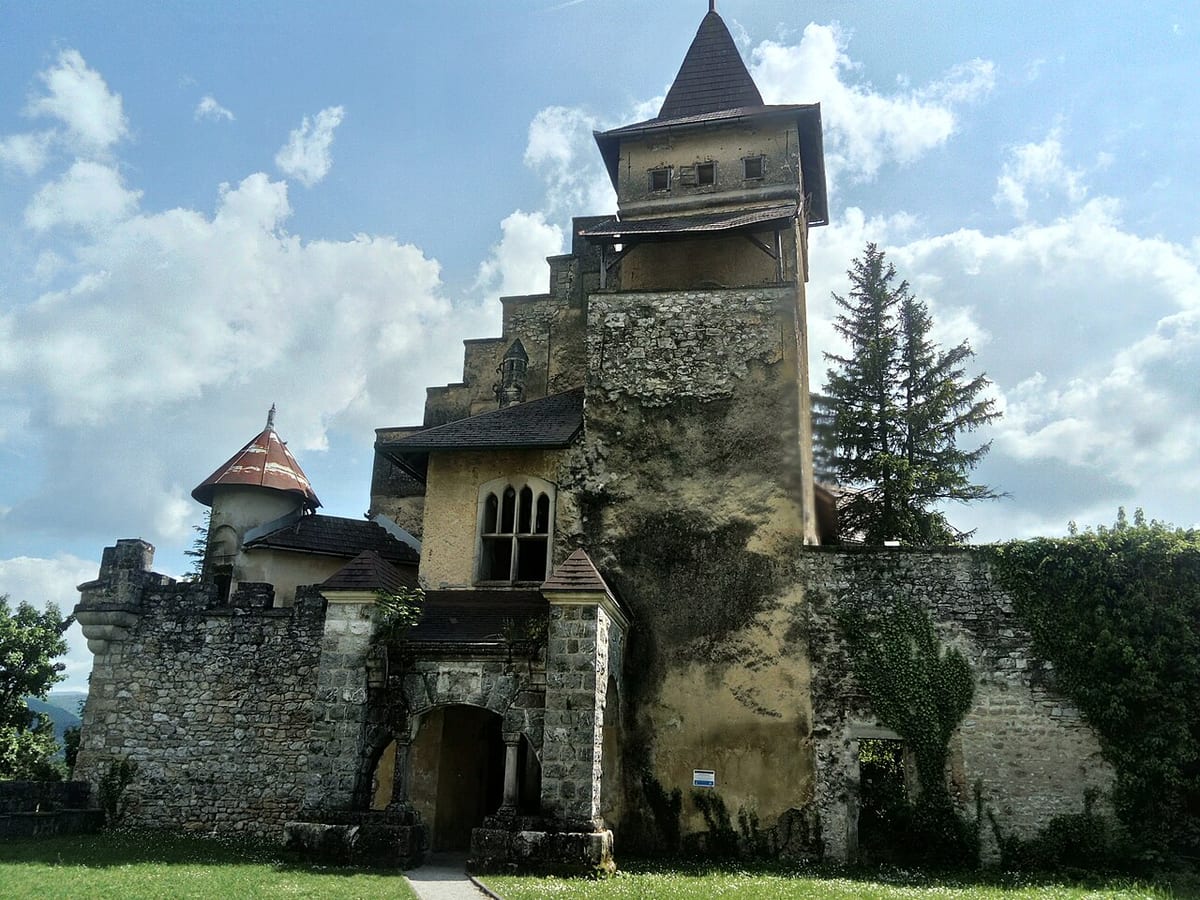
Ostrožac was a settlement as well as a stronghold. The Museum of the Bosnian Kingdom identifies a purchase document from 1321 as its first reliable written record. A charter of 1330 refers to both the fort and its settlement; a municipal seal survives on a document from 1403. These records place merchants, craftspeople and municipal government alongside the noble household. The medieval site belonged to the political world of the Babonić family and the Hungarian crown, with a period under the Bosnian Hrvatinić family.
After Ottoman authority became established in 1578, Ostrožac served as the seat of a captaincy. Cazin's cultural institution attributes an enlargement to Osman-aga Beširević around the turn of the eighteenth century: artillery platforms and a captain's residence occupied the expanded fort. The residence stood on the site later used by the Berks house. That sequence helps explain why the enclosure is much larger than a single tower. Administration, accommodation and artillery required space, and successive occupants reused ground already enclosed by defensive walls.
Hamdija Kreševljaković's 1953 survey dates Lothar von Berks's restoration and construction of a residence to 1900–1902. The residence dates to the Austro-Hungarian administration, even though its towers refer to much older architectural forms. The date also changes how the surrounding fortifications should be understood: the early twentieth-century intervention included restoration of the old enclosure. A photograph of Ostrožac therefore records both inherited masonry and a later owner's decisions about repairing and inhabiting it. The residence is evidence of the site's Austro-Hungarian period in its own right.
The sculpture colony brought another use to the grounds. Cazin's institutional history dates its activity to 1967; the dedicated colony account records a municipal founding decision in 1970. Those dates concern different stages of its establishment. Sculptors work with bihacit, a stone associated with the region, leaving substantial works in the open air. The old enclosure provides space for making and displaying these modern works.
In November 2023 the Federal Ministry of Culture and Sports announced 750,000 KM in co-financing for renovation of the Lothar von Berks residence within the national monument. The commitment singled out the house for conservation work. It was a funding announcement, not a completion report or confirmation that the interior was open to visitors.
Cazin · Una Valley
Bosnian Castles editorial · Prepared with AI assistance using the cited sources. This is not a firsthand field report.