Jajce Fortress
Jajce · Central Bosnia
History & heritage
A royal portal, artillery positions and later service buildings survive within these fortresses. The structures belong to different periods of occupation and repair.
Jajce’s heritage agency dates the carved Kotromanić royal portal to the fifteenth century. Inside the fortress it also identifies a powder store from the late eighteenth or early nineteenth century and a water reservoir from Austro-Hungarian administration.
The portal displayed royal authority at the entrance. The later buildings served ammunition storage and water supply. Their presence within the same enclosure records the continued use of the fortress after the medieval kingdom.
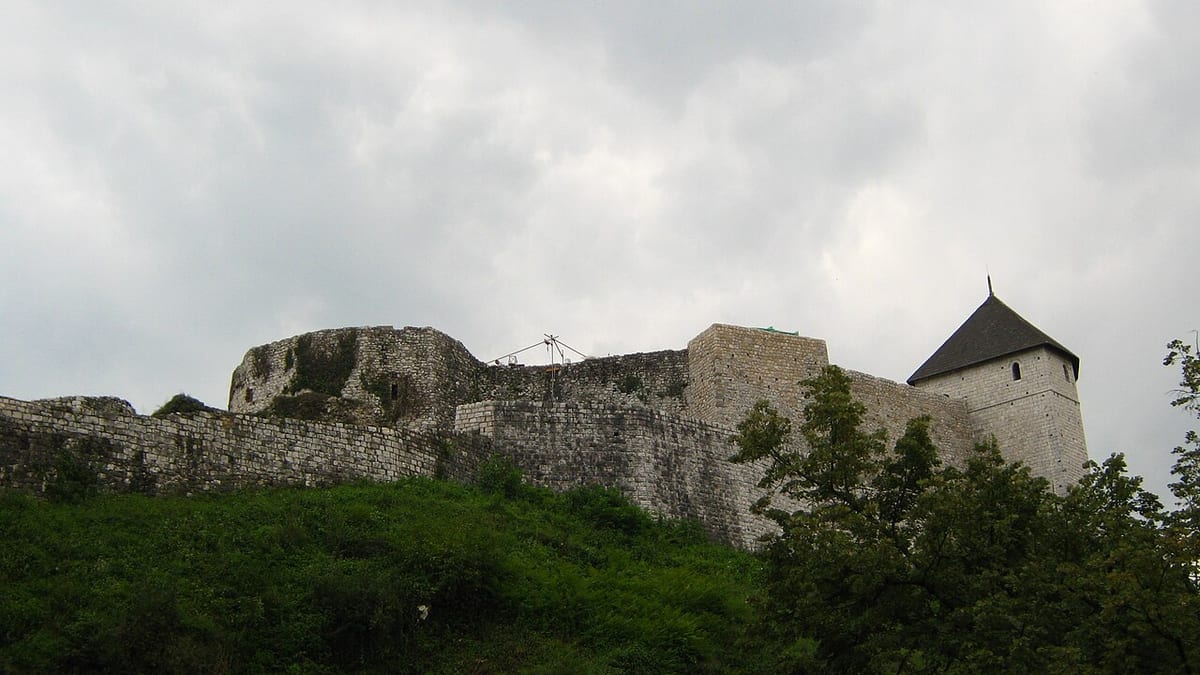
Travnik’s regional museum states that no known historical source identifies the fortress’s builder or exact construction year. It attributes much of its present appearance to Ottoman intervention.
A medieval origin therefore does not date the whole surviving complex. Attributing its construction to a particular ruler would require evidence beyond the outline of its walls, and the museum leaves that question unresolved.
Tešanj’s museum describes Ottoman gun platforms, including one with a casemate, and Dizdar’s Tower in the lower part of the fortress. The platforms covered the main approach.
Their placement relates to the route towards the entrance. These positions record the adaptation of the fortress for artillery defence, alongside older elements of the complex.
Travnik’s museum presents weaving, coin striking and a scribe’s work in its Garbun educational setting. These demonstrations introduce activities beyond the military history of the fortress.
They are modern interpretation, rather than evidence that each activity took place in that exact room. The distinction separates the surviving building from the museum’s use of it to explain historical skills.
Jajce · Central Bosnia
Travnik · Lašva Valley
Tešanj · Usora
Bosnian Castles editorial · Prepared with AI assistance using the cited sources. This is not a firsthand field report.